Piera Bioscience

A biotech company building around VLC-PUFAs — the specialized structural lipids the body produces to sustain its most metabolically active tissues, and stops producing with age.

Who we are

A class of lipids the body once made for itself, and stopped making with age. We are the company built to solve that.

With age, the body silences the production of a class of lipids that several of its most important tissues depend on. The retina is the most visible casualty. The brain, the cardiovascular system, and reproductive tissues are the next questions. There is no current product that addresses the underlying deficit at its source.

Piera was founded to change that. We are scientists, operators, and clinicians focused on a single problem: producing these lipids at the quality and scale modern biology requires, and getting them to the tissues that need them. We work across the full pathway — from production to delivery to measurement — with a clear sequence of programs that begins with vision and extends into the rest of the systems where this biology applies.

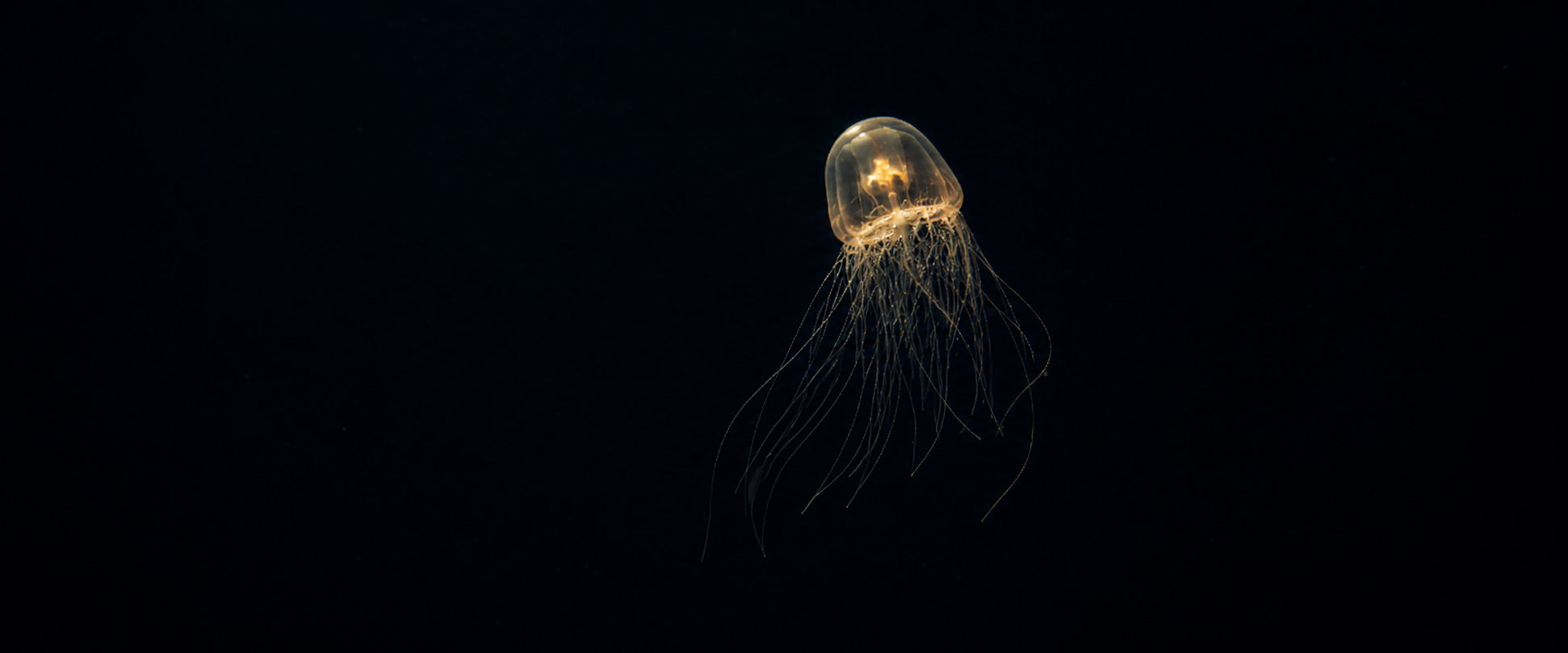
A small translucent jellyfish suspended in dark water, glowing softly with internal gold light.

Turritopsis dohrnii. The only known animal capable of biologically reversing its own aging.

The science

A class of lipids the body forgets how to make.

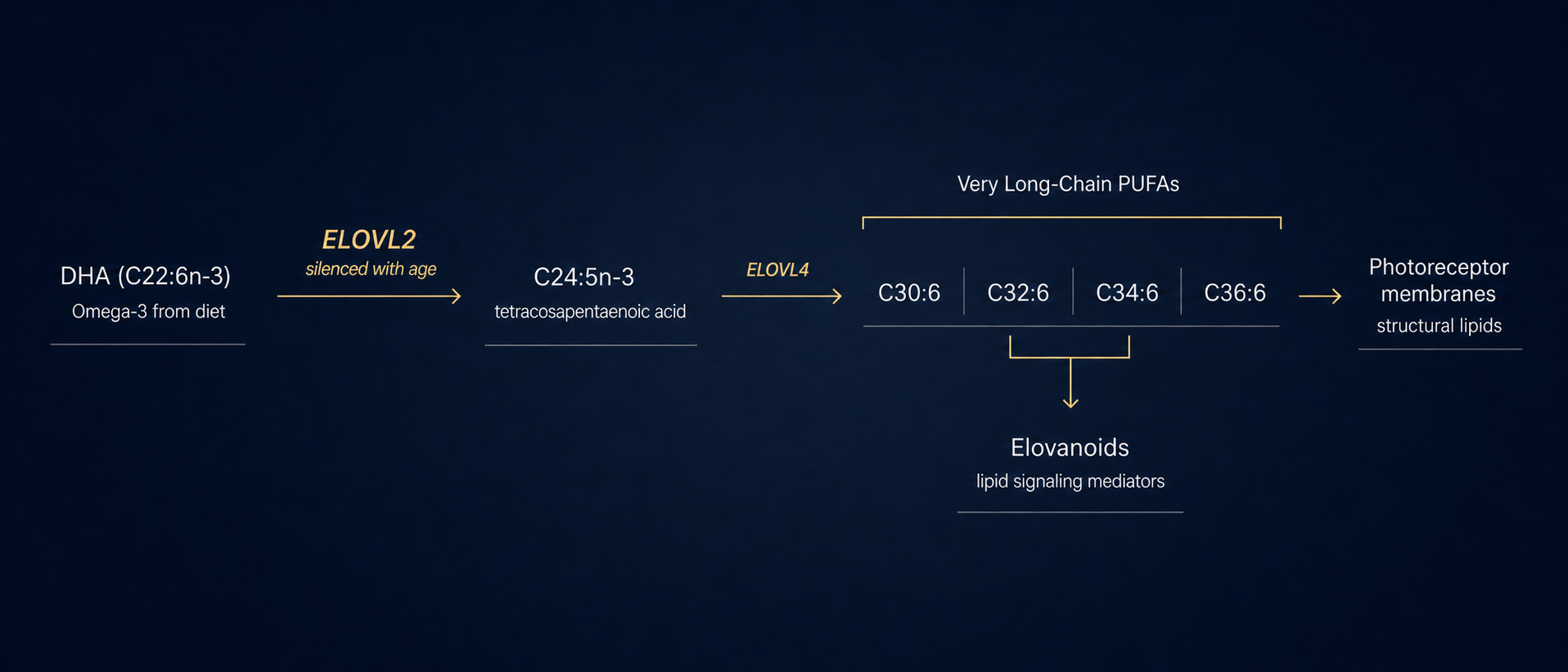
Very long-chain polyunsaturated fatty acids (VLC-PUFAs) are a specialized family of structural lipids built from the same omega-3 raw materials the body already uses, then extended into longer, rarer molecules with properties standard fats cannot replicate. They are not consumed in the diet in any meaningful quantity. The body manufactures them internally, in the tissues that need them most.

Their production depends on a single enzyme, ELOVL2. Beginning in middle age, the gene that produces ELOVL2 is progressively silenced through DNA methylation — not damaged, just switched off. The tissues that depend on these lipids continue to demand them. The supply quietly fails.

ELOVL2 methylation is now recognized as one of the strongest molecular markers of biological age ever identified. It does not simply correlate with aging; it is upstream of a class of lipids the body uses to maintain itself. That makes restoring these lipids a direct intervention on a fundamental aging pathway, rather than a downstream symptom of it.

Diagram of the ELOVL2 pathway. DHA is elongated by ELOVL2 to C24:5n-3, then by ELOVL4 to very long-chain PUFAs (C30 to C36), which serve as structural lipids in photoreceptor membranes and as precursors to elovanoid signaling mediators.
The ELOVL2 pathway. Very long-chain PUFAs and their lipid signaling derivatives.
Where VLC-PUFAs matter

Tissues of focus.

VLC-PUFAs are concentrated in the body’s most metabolically active tissues, and the consequences of their decline are tissue-specific. We are starting where the biology is strongest, with a roadmap into the systems where the same pathway applies.

Lead program

Retina

The retina consumes more oxygen per gram than almost any other tissue. Photoreceptor membranes depend on a continuous supply of VLC-PUFAs to function under that load. When the pathway slows, the retina is among the first tissues to show it — and where intervention is possible today.

Brain

VLC-PUFAs are present in neural tissue and are being studied for their roles in membrane signaling and cognitive function with age.

Reproductive tissue

VLC-PUFAs are found in high concentrations in reproductive tissues, with active research on fertility and gamete development.

Skin & barrier

Related lipids contribute to skin structure and barrier integrity, with measurable changes observed across the aging timeline.

Cardiovascular

Early research explores connections between the VLC-PUFA pathway and the metabolic and inflammatory processes underlying cardiovascular aging.

Skeletal muscle

Muscle is among the most metabolically active tissues in the body. The VLC-PUFA pathway is an emerging area of research in muscle metabolism, performance, and age-related decline.

Hallmarks of aging

VLC-PUFAs and the hallmarks of aging.

The hallmarks of aging are the canonical framework for understanding why bodies age. Emerging research suggests VLC-PUFAs and their derivatives engage many of these hallmarks directly — a convergent lipid axis through what has historically been treated as twelve separate problems.

01

Genomic Instability

DNA damage accumulates and drives dysfunctional cell behavior.

Direct DNA-damage studies in VLC-PUFA models have not yet been performed. An open research area.

02

Telomere Attrition

Protective caps on chromosomes erode, limiting tissue regeneration.

VLC-PUFA-derived elovanoids have been shown to restore telomerase (TERT) expression in stressed neurons.

03

Epigenetic Alterations

Changes to gene expression silence the programs that keep cells young.

ELOVL2 methylation is the strongest known epigenetic clock signal. VLC-PUFAs bypass the resulting deficit.

04

Loss of Proteostasis

Cells lose the ability to fold proteins correctly and clear what doesn’t.

ELOVL2 loss triggers ER stress and unfolded protein response. VLC-PUFAs reduce tau hyperphosphorylation in neural models.

05

Deregulated Nutrient Sensing

Cells respond poorly to the metabolic signals that govern growth and energy.

AdipoR1, a key nutrient-sensing receptor, regulates VLC-PUFA production in cells. The pathway is integrated into cellular energy decisions.

06

Mitochondrial Dysfunction

Energy production declines and oxidative damage accumulates.

VLC-PUFA loss reduces mitochondrial respiratory capacity by approximately 50%. Restoration reverses cellular aging phenotypes.

07

Cellular Senescence

Damaged cells accumulate, driving chronic inflammation and tissue decline.

VLC-PUFAs and elovanoids suppress canonical senescence markers (p16, p21, p27, p53) and the inflammatory SASP secretome.

08

Stem Cell Exhaustion

Tissues lose the ability to generate healthy replacement cells.

VLC-PUFA depletion accelerates stem cell exhaustion across tissues. Repletion supports neurogenesis after injury.

09

Altered Intercellular Communication

Cell-to-cell signaling becomes noisy and dysfunctional with age.

Elovanoids are intercellular signaling molecules — paracrine lipid mediators that coordinate tissue homeostasis between cells.

10

Dysbiosis

An imbalance in the gut microbiome contributes to age-related conditions.

Omega-3 fatty acids broadly support microbiome diversity, but VLC-PUFA-specific microbiome research has not been performed.

11

Disabled Macroautophagy

Cellular cleanup and recycling systems decline, allowing waste to accumulate.

VLC-PUFA disruption impairs lysosomal clearance. Elovanoids restore expression of autophagy genes in stressed cells.

12

Chronic Inflammation

A persistent low-grade inflammation disrupts tissue function and immunity.

Elovanoids are pro-resolving lipid mediators. They suppress TNF-alpha, MCP-1, NLRP3 inflammasome activation, and chronic sterile inflammation.
Some hallmarks reflect direct mechanistic evidence. Others reflect emerging or open areas of research, and we say so.

Platform

Next-generation lipid production and delivery.

Three capabilities define the company: how we produce VLC-PUFAs, how we deliver them to the tissues that need them, and how we measure the underlying pathway. Each is being developed in-house, and each contributes to the same end — restoring a class of lipids the body has stopped making for itself.

  • 01
    Production
    Proprietary methods to produce VLC-PUFAs at higher concentrations and lower cost than is currently possible from natural sources.
  • 02
    Delivery
    Formulation and delivery systems engineered to put VLC-PUFAs where the body needs them, beginning with the retina.
  • 03
    Pathway
    Direct measurement of the underlying enzymatic pathway, allowing intervention to be guided by biology rather than inference.
Shafts of warm gold sunlight cutting downward through deep dark water.
Consumer brand

The first commercial expression of the platform.

ELOVL brings VLC-PUFAs out of the research literature and into a daily product, beginning with vision. Piera develops the science; ELOVL brings it to people.

By Piera
ELOVL™
A daily oral VLC-PUFA for the retina

The first product, Vision Lipids™, is a daily oral VLC-PUFA formulated for adults whose retinal lipid production has begun to decline with age.

Visit elovl.com
Contact

Get in touch.

For partnership, research collaboration, or general inquiries, email the founder directly. For investor inquiries, please use “Investor” in the subject line.

steve@pierabio.com